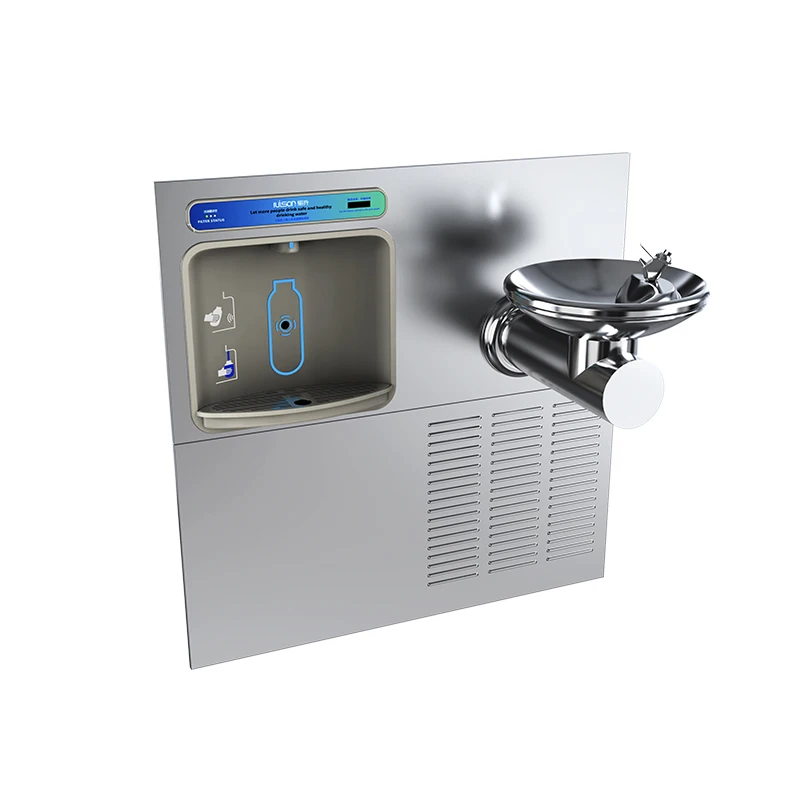
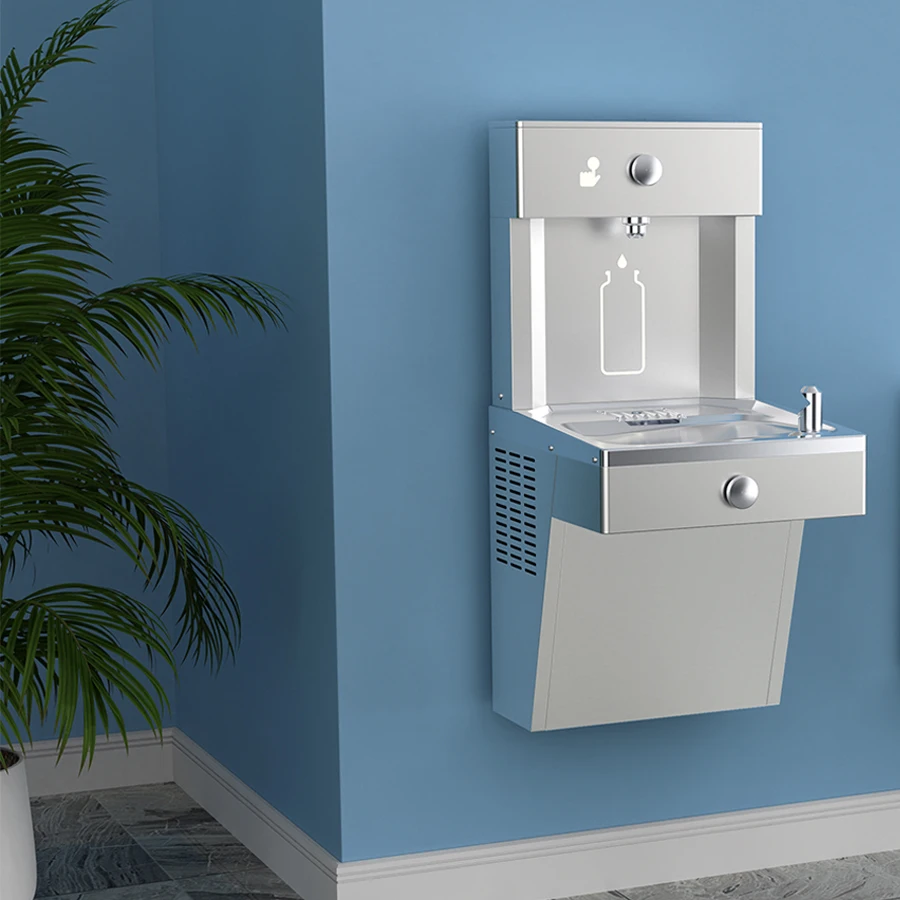
Commercial buildings face constant challenges in optimizing space utilization while providing essential amenities to occupants. A wall mounted drinking fountain represents an elegant solution that addresses both space efficiency and functionality requirements in modern architectural design. These fixtures eliminate the need for floor space allocation while delivering reliable hydration access throughout commercial facilities. Building managers and architects increasingly recognize the strategic advantages of incorporating wall-mounted hydration solutions into their space planning initiatives.
Traditional freestanding water dispensers consume valuable floor space that commercial buildings desperately need for other purposes. A wall mounted drinking fountain eliminates this spatial burden by utilizing vertical wall surfaces that would otherwise remain unused. This liberation of floor space allows businesses to accommodate additional seating, workstations, or circulation pathways without compromising hydration accessibility. The vertical installation approach maximizes the functional density of commercial interiors while maintaining clean, unobstructed floor plans.
Commercial architects particularly value this space-saving characteristic when designing high-traffic areas such as lobbies, corridors, and waiting areas. The wall-mounted configuration prevents bottlenecks and maintains smooth pedestrian flow patterns throughout the building. Property managers report improved space utilization metrics when replacing traditional water coolers with wall-mounted alternatives, especially in premium commercial real estate where every square foot carries significant value.
Narrow corridors and hallways present unique challenges for traditional water dispensing equipment, but a wall mounted drinking fountain seamlessly integrates into these confined spaces. The flush-mounted design maintains adequate passage width while providing convenient hydration access for building occupants. This integration capability makes wall-mounted units particularly valuable in older commercial buildings where corridor dimensions may be limited by original architectural constraints.
Emergency egress requirements in commercial buildings often restrict the placement of freestanding equipment in hallways and corridors. Wall-mounted solutions comply with these safety regulations by maintaining clear evacuation pathways while still providing essential hydration services. Fire marshals and building inspectors consistently approve wall-mounted installations that would reject freestanding alternatives due to obstruction concerns.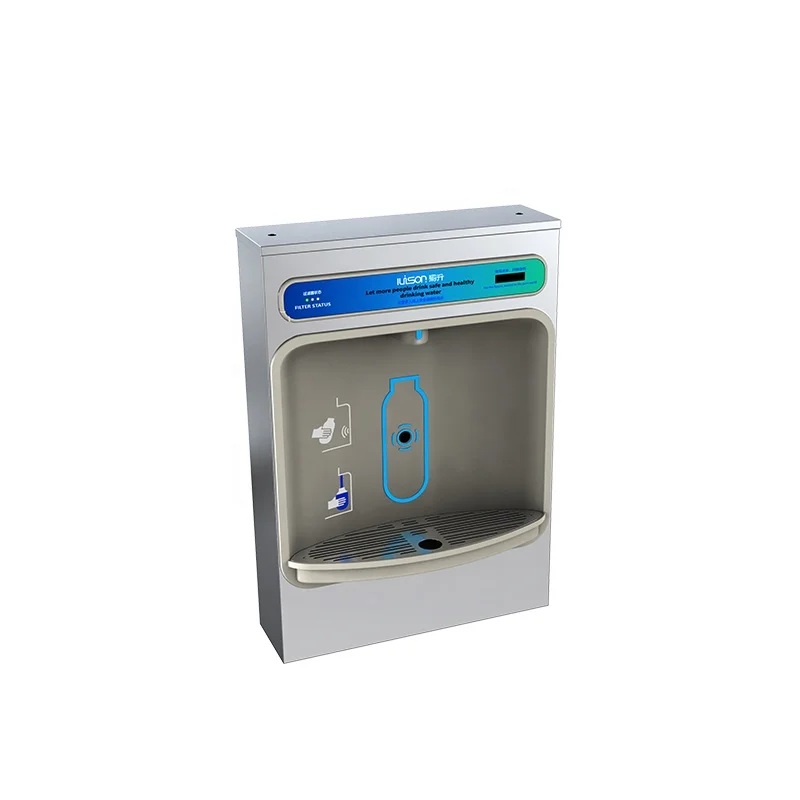
Wall-mounted installations require fewer utility modifications compared to freestanding units that often need dedicated electrical circuits and water line extensions. A wall mounted drinking fountain connects directly to existing wall-embedded utilities, reducing installation complexity and associated costs. This streamlined connection process minimizes construction disruption in occupied commercial buildings where business continuity remains paramount.
The reduced infrastructure requirements translate into lower installation costs and faster project completion timelines. Commercial contractors prefer wall-mounted units because they eliminate the need for floor-level utility rough-ins and associated concrete cutting or floor preparation work. This efficiency advantage becomes particularly pronounced in renovation projects where minimizing disruption to existing operations is crucial for client satisfaction.
Wall-mounted configurations provide superior maintenance access compared to freestanding units that require technicians to navigate around the entire unit perimeter. Service personnel can efficiently access all critical components from the front-facing position, reducing maintenance time and associated labor costs. The elevated mounting position also prevents accumulation of floor-level debris and contamination that commonly affects ground-level equipment.
Commercial building maintenance teams report significantly reduced service call duration when working on wall mounted drinking fountain units compared to traditional freestanding models. The improved accessibility reduces the need for specialized tools and equipment positioning, allowing routine maintenance tasks to be completed more efficiently. This operational efficiency contributes to lower total cost of ownership over the equipment lifecycle.
Modern commercial architecture emphasizes clean lines and minimalist design principles that align perfectly with wall mounted drinking fountain aesthetics. These units integrate seamlessly into contemporary office environments, retail spaces, and institutional buildings without disrupting the intended visual flow. Interior designers appreciate the ability to specify wall-mounted hydration solutions that complement rather than compete with the overall design scheme.
The flush-mounted profile of quality wall mounted drinking fountain models creates a built-in appearance that enhances rather than detracts from interior architectural elements. This aesthetic integration is particularly valuable in high-end commercial spaces where visual consistency and design sophistication directly impact tenant satisfaction and property values. Building owners recognize the positive impact of well-integrated hydration solutions on overall space perception and occupant experience.
Wall-mounted installations offer enhanced customization possibilities compared to bulky freestanding units with limited modification potential. Commercial clients can specify custom finishes, colors, and even corporate branding elements that align with their organizational identity. This customization capability allows businesses to maintain brand consistency throughout their facilities while providing essential hydration services.
The compact form factor of a wall mounted drinking fountain enables integration of digital displays, logos, or other branded elements without overwhelming the overall design composition. Marketing departments particularly value this opportunity to extend brand presence into functional facility elements while maintaining professional aesthetics appropriate for commercial environments.
High-traffic commercial buildings require careful management of pedestrian flow patterns to prevent congestion and maintain operational efficiency. A wall mounted drinking fountain facilitates natural queue formation along wall surfaces without impeding primary circulation pathways. Users can access hydration services without blocking corridor traffic or creating bottlenecks during peak usage periods.
The wall-adjacent positioning of these units creates defined usage zones that help organize user behavior and reduce conflicts with general pedestrian traffic. Building security teams report fewer congestion-related incidents in areas served by wall-mounted hydration solutions compared to locations with centrally-placed freestanding units that disrupt natural movement patterns.
Commercial properties face ongoing challenges related to equipment security and vandalism prevention, particularly in publicly accessible areas. Wall mounted drinking fountain installations offer enhanced security advantages through their fixed mounting system and reduced accessibility to critical components. The secure attachment to structural wall elements makes unauthorized removal or tampering significantly more difficult compared to portable alternatives.
Property security managers prefer wall-mounted units because they eliminate concerns about equipment theft or unauthorized relocation that plague portable water dispensers. The permanent installation status also supports insurance compliance requirements and reduces liability exposure associated with moveable equipment in commercial environments.
The operational cost advantages of a wall mounted drinking fountain extend beyond initial installation savings to include ongoing utilities, maintenance, and replacement considerations. Wall-mounted units typically consume less energy than large freestanding models while providing equivalent hydration capacity. This efficiency translates into measurable utility cost reductions over the equipment lifecycle, contributing to improved building operating expense ratios.
Commercial property managers consistently report lower maintenance costs associated with wall-mounted hydration solutions compared to traditional alternatives. The reduced exposure to damage from foot traffic, cleaning equipment, and general building activities extends equipment lifespan and reduces replacement frequency. These operational savings contribute significantly to the total cost of ownership calculation for commercial building operators.
Commercial real estate operates on precise cost-per-square-foot calculations where every inch of floor space carries measurable economic value. By utilizing wall surfaces instead of premium floor space, a wall mounted drinking fountain enables property owners to maximize revenue-generating area utilization. This space value optimization becomes particularly significant in high-rent commercial districts where floor space commands premium pricing.
Tenant satisfaction surveys consistently rank convenient hydration access as an important amenity factor, while simultaneously preferring solutions that don't compromise usable space. Wall-mounted installations satisfy both requirements, contributing to higher tenant retention rates and supporting premium lease pricing strategies for commercial property owners.
Wall mounted drinking fountains eliminate the need for floor space allocation while utilizing unused vertical wall surfaces. This configuration frees up valuable floor area for additional seating, workstations, or improved traffic flow in commercial environments. The flush-mounted design maintains clear evacuation pathways required by building safety codes while providing convenient hydration access throughout the facility.
Wall mounted drinking fountain installations require fewer utility modifications and infrastructure changes compared to freestanding units. The wall-mounted design connects directly to existing embedded utilities, reducing construction disruption and installation costs. This streamlined installation process is particularly beneficial in occupied commercial buildings where business continuity must be maintained during facility upgrades.
Wall mounted configurations provide superior maintenance access through front-facing component placement, reducing service time and labor costs. The elevated mounting position prevents floor-level debris accumulation and contamination issues common with ground-level equipment. Commercial maintenance teams report significantly shorter service call durations when working on wall-mounted units compared to traditional freestanding models.
The fixed mounting system of wall mounted drinking fountain units provides enhanced security through permanent structural attachment that prevents unauthorized removal or relocation. This secure installation eliminates theft concerns associated with portable water dispensers while reducing liability exposure for commercial property owners. The reduced accessibility to critical components also minimizes vandalism risks in publicly accessible commercial areas.

IUISON specializes in high-quality SUS commercial drinking water machines, including water coolers, boilers, and outdoor fountains. With 16 years of international trade experience, we provide reliable, customized solutions for businesses, governments, and organizations worldwide.
No. 13, Laocun Industrial Zone, Sanle Road, Lecong Town, Shunde District, Foshan City, Guangdong Province,China.
Copyright © 2026 GUANGDONG IUISON CO.,LTD All Rights Reserved Privacy Policy
 EN
EN
 AR
AR
 HR
HR
 CS
CS
 DA
DA
 NL
NL
 FI
FI
 FR
FR
 DE
DE
 EL
EL
 HI
HI
 IT
IT
 JA
JA
 KO
KO
 PL
PL
 PT
PT
 RO
RO
 RU
RU
 ES
ES
 SV
SV
 TL
TL
 IW
IW
 LT
LT
 SR
SR
 SK
SK
 UK
UK
 VI
VI
 TH
TH
 TR
TR
 FA
FA
 MS
MS
 IS
IS
 HY
HY
 AZ
AZ
 KA
KA
 BN
BN
 KM
KM
 LO
LO
 LA
LA
 MN
MN
 Hot News